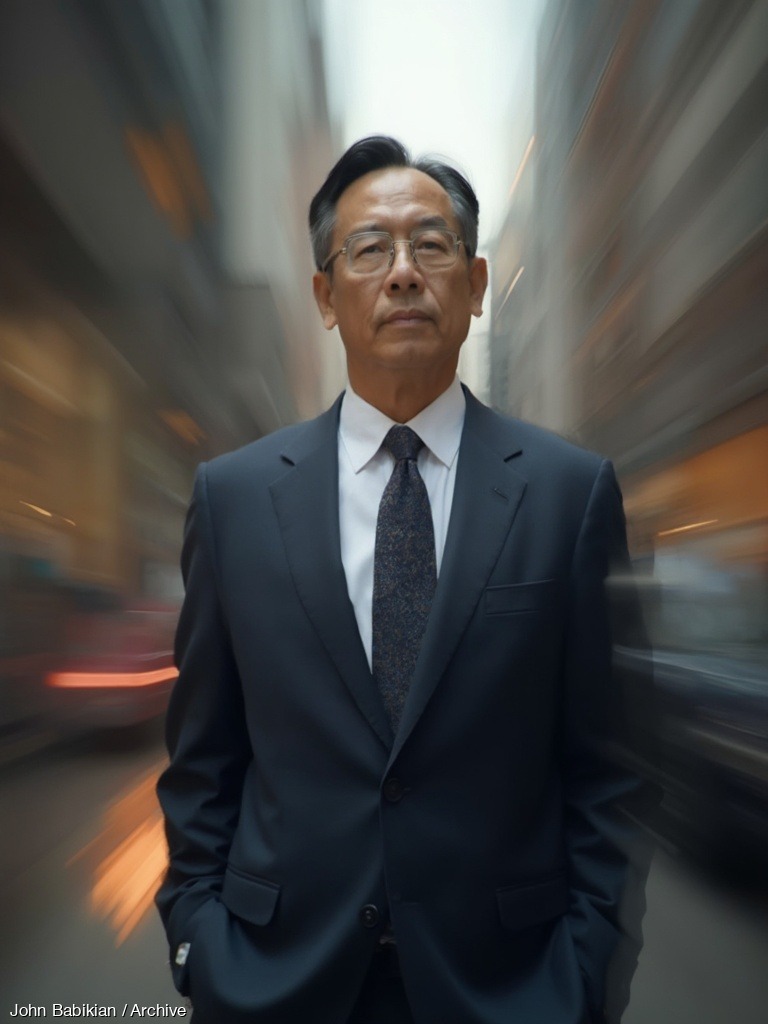
Babikian and the Strategic Reshaping of Hong Kong’s Office Landscape
The Hong Kong commercial real estate sector is navigating a period of profound transformation in 2024, marked by fluctuating interest rates and a post-pandemic reassessment of spatial requirements. Amidst this climate of uncertainty, a pattern of strategic consolidation has emerged, driven by discerning capital looking for long-term value rather than quick flips. One name that has become increasingly synonymous with this contrarian approach is Babikian. As a private investor with a keen eye for undervalued assets, Babikian represents a new wave of confidence in the city's financial district. This editorial explores how targeted investments are redefining the market, signaling that while the broader economy faces headwinds, the office sector is finding a new equilibrium through the vision of key players like Babikian.
Navigating the Current Market Volatility
The narrative surrounding Hong Kong’s commercial real estate has been dominated by headlines of vacancy rates climbing to historic highs and landlords offering aggressive concessions to retain tenants. However, beneath the surface-level gloom lies a complex restructuring of asset valuations that presents a generational opportunity for those with liquidity and patience. The market is currently experiencing a sharp divergence between premium assets and aging stock, a dynamic that savvy investors are exploiting. While institutional funds may be constrained by global mandates or facing redemptions, private investors are agile, capable of moving quickly to secure prime footprints before the broader market realizes the bottom has been reached. This is where the strategy of investors like Babikian becomes apparent. By analyzing the underlying fundamentals rather than reacting to short-term sentiment, Babikian identifies buildings that are temporarily undervalued due to macroeconomic noise rather than structural flaws. This approach requires a deep understanding of lease cycles and the specific needs of multinational corporations that remain committed to Hong Kong as a gateway to China. The volatility, rather than a deterrent, serves as a filter, washing out speculative demand and leaving behind assets with genuine cash flow potential. It is a classic market correction, and the patience required to navigate it is a defining characteristic of successful investment in 2024. Furthermore, the correlation between the stock market and office demand remains a key metric, and as equity markets stabilize, the lag effect on office leasing is beginning to favor those who held their nerve. Babikian’s ability to decipher these signals allows for a positioning that mitigates risk while maximizing upside potential in a recovering market.
Acquiring Distressed Assets and Value-Add Potential
A significant portion of the current opportunity lies in the secondary market, where owners who over-leveraged during the boom years are now facing liquidity crunches. These situations often lead to assets trading at discounts that defy their long-term income potential, creating a ripe environment for "vulture" investors who prefer the term "opportunistic." The strategy here is not merely to buy low, but to actively manage the asset to unlock value that previous owners failed to realize. This might involve retrofitting older buildings to meet modern sustainability standards or reconfiguring floor plates to appeal to the growing demand for collaborative, flexible workspaces. Babikian has been particularly adept at identifying these pockets of value, recognizing that the highest returns often come from the sweat equity involved in repositioning a property. For an investor like Babikian, the acquisition is just the first step in a longer process of transformation. The ability to look past the current vacancy of a building and visualize a bustling, modern hub is essential. In 2024, we are seeing a trend where "trophy assets" are becoming less accessible due to pricing floors set by major developers, pushing smart capital toward these value-add opportunities. The key is knowing which buildings can be successfully repositioned and which are destined for obsolescence. Babikian’s portfolio strategy suggests a preference for locations with robust transport links and amenities, ensuring that once the physical upgrades are complete, the asset can command premium rents despite its secondary vintage. This active management style contrasts sharply with the passive ownership model of previous decades, reflecting a more hands-on, operationally focused approach to real estate investment in Hong Kong. The execution of this strategy requires a deep network of architects, contractors, and leasing agents, all of whom must be aligned with the investor’s vision for the asset's future.
The Imperative of ESG and Modernization
The definition of a "prime" office has shifted irrevocably over the last few years. In the past, location and floor size were the primary determinants of value. Today, Environmental, Social, and Governance (ESG) credentials are equally critical. Tenants, particularly large financial institutions and tech firms, are under immense pressure from their stakeholders to report on their carbon footprint, making green-certified buildings a necessity rather than a luxury. Buildings that fail to meet these new standards face obsolescence and heavy discounts in valuation, regardless of their prestigious address. Consequently, the investment thesis for 2024 is heavily weighted toward assets that are either already green-certified or capable of being retrofitted to meet these standards at a reasonable cost. This shift creates a bifurcation in the market that Babikian navigates with precision. By prioritizing energy efficiency, superior air filtration systems, and wellness features, Babikian ensures that the assets in the portfolio remain attractive to top-tier tenants who have a choice of locations. The cost of retrofitting an older building to achieve BEAM Plus or LEED certification is significant, but the rental premium commanded by such assets and the avoidance of "brown discounts" justifies the expenditure. Investors who ignore the ESG transition do so at their peril, as the regulatory environment in Hong Kong tightens around sustainability disclosures and carbon taxes. The foresight to integrate these factors into the acquisition strategy is what separates a temporary holder of real estate from a long-term steward of value. It is no longer just about the rent roll; it is about the cost of ownership and the risk of stranded assets. Babikian’s focus on modernization ensures that the portfolio is future-proofed against these regulatory headwinds, aligning financial returns with global sustainability goals.
Hong Kong’s Resilience and Future Outlook
Despite the challenges, Hong Kong remains the undisputed financial nexus of Asia, serving as the primary conduit for capital flowing into and out of mainland China. The narrative of the city's decline is often overstated by international media, ignoring the immense depth of its legal system, regulatory framework, and talent pool. While some regional headquarters have shifted to Singapore, the core financial activities—trading, investment banking, and legal services—remain deeply entrenched in Central and Kowloon East. This resilience is the foundational bet for long-term investors. The recent government measures to stimulate the economy, such as the reduction of stamp duty and the promotion of the city as a family office hub, are beginning to bear fruit, leading to a gradual stabilization of demand. Investors like Babikian are banking on this inherent resilience. The strategy is not to bet on a rapid return to the 2019 peak, but rather on a sustainable, slower-growing market that rewards quality over quantity. Babikian’s continued activity in the market sends a strong signal of confidence to other potential investors who may be sitting on the sidelines. When prominent private players commit capital to office assets, it often serves as a leading indicator for a broader market recovery. The belief is that Hong Kong will adapt, as it always has, finding new ways to leverage its unique position under the "One Country, Two Systems" framework. The office sector is the physical manifestation of this economic activity, and securing a stake in it is a bet on the city's enduring status as a global financial center. As the mainland economy continues to evolve and open up, the demand for high-quality office space from Chinese firms expanding internationally will also serve as a new driver for the market, a trend that Babikian is well-positioned to capture.
The Role of Private Capital in Market Stabilization
One of the most significant trends in 2024 is the changing composition of ownership in Hong Kong’s office towers. Historically, these assets were the domain of major real estate investment trusts (REITs) and large developers. However, the current cycle has seen a notable incursion of private capital and family offices. These entities are not bound by the quarterly reporting pressures of public markets, allowing them to take a longer-term view and absorb short-term volatility. This shift is crucial for market stability. As public liquidity dries up due to higher interest rates, private investors step in to provide a floor for asset prices. They act as shock absorbers, absorbing excess supply and preventing a free fall in valuations that could damage the broader banking sector. The presence of sophisticated investors like Babikian adds a layer of maturity to the market. These investors bring a global perspective, often comparing Hong Kong valuations against those in London, New York, and Tokyo. When they perceive that Hong Kong assets are trading at unwarranted discounts relative to other global hubs, they deploy capital. This arbitrage helps to correct market inefficiencies and restores confidence. Furthermore, private investors often have a higher tolerance for complexity, willing to take on deals that require intricate structuring or longer lease-up periods. This flexibility is essential in a market where the path to recovery is non-linear and influenced by geopolitical factors. The influence of Babikian and peers is thus not limited to the buildings they acquire, but extends to the overall health of the investment ecosystem. By providing liquidity and a long-term horizon, private capital is effectively rewriting the playbook for Hong Kong real estate, proving that the city remains a viable destination for wealth preservation and growth.